
Unclaimed Money surfaces when banks, utilities, or government agencies hold funds that owners have not claimed for years, and state treasuries maintain an unclaimed property database to protect those assets. By entering a name, previous address, or business title into the state treasury unclaimed money portal, users can perform an unclaimed funds search that reveals dormant account balances, uncashed checks, unclaimed tax refunds, and even forgotten insurance payouts. The unclaimed cash recovery process often begins with a missing money claim form, which asks for basic identification and proof of ownership. Whether you are hunting for a lost inheritance, an unclaimed retirement account, or unclaimed wages, the portal aggregates records from diverse sources—banks, employers, and utility companies—so that a single search can uncover multiple asset types. Understanding the unclaimed money eligibility criteria and claim deadline helps avoid missed opportunities, while awareness of unclaimed money claim fees and fraud prevention measures ensures a safe, transparent experience.
Unclaimed Money research also highlights the importance of verification steps such as identity confirmation, address validation, and name change documentation before submitting a claim. After completing the unclaimed money claim paperwork, claimants can track their unclaimed money claim status check online, receiving updates on review progress and any requests for additional evidence. Success stories often involve careful review of the unclaimed money claim assistance resources, which guide users through the unclaimed estate assets and unclaimed bank account recovery stages. By following proven unclaimed money claim tips—like comparing reported holder information, reviewing property types, and keeping supporting documents organized—individuals can streamline the unclaimed money claim process and turn forgotten funds into tangible financial relief.
How to Search Unclaimed Money
Searching for unclaimed money starts with visiting the official state treasury portal where records of dormant funds are stored. The lookup tool lets you enter a name, business title, or property ID to check for assets held by banks, employers, insurance firms, and government offices. You can also access public documents to review official records. Results show the holder, the amount reported, and the type of property linked to your name. Once you find a match, you can begin the recovery process right away through the same portal.
Official Search Portal: https://www.trs.virginia.gov/va-trs/epay/unclaimed/
Steps to Search
- Open the official unclaimed property portal listed above in your web browser.
- Choose the search option that fits your needs, such as owner name, business name, or property record.
- Type the full name or business title into the search box, including any previous or alternate names you have used.
- Review the list of results to see reported holders, property types, and amounts that match your entry.
- Select a record that belongs to you to view full details and start the claim process through the portal.
Fairfax County Unclaimed Money Search
The Fairfax County unclaimed money search connects residents with funds reported by local businesses, banks, and government agencies. Records often surface from utility deposits, payroll accounts, or insurance refunds that were never collected. Searching by full legal name gives the most accurate results, especially when paired with previous addresses. Reviewing every match carefully helps you identify funds that belong to you versus other people who share a similar name.
Search by Owner Name
Searching by owner name is the most common method used to find unclaimed money in Fairfax County. You should enter your full legal name as it appears on bank accounts, tax records, or employment files. Common misspellings or shortened names can cause you to miss valid matches, so check both formal and informal versions of your name. The portal will show every record linked to the name you entered along with the holder and amount.
Search by Business Name
Business owners can search for unclaimed funds tied to their company by typing the full legal business name into the lookup field. This method catches vendor payments, refund checks, or credit balances that a company never collected. Searching for both active and dissolved business names helps track down old assets. The portal shows the property type, the reported holder, and the amount tied to each business record.
Search by Previous Name
Searching by a previous name catches unclaimed money left behind before a name change, marriage, or divorce. Many people forget that old accounts and uncashed checks can still carry their former name. Try every name you have used on financial documents, including middle names and maiden names. The portal stores records under the exact name reported by the holder, so older names often yield hidden matches.
Search by Property Record
Searching by property record requires the property ID number issued by the reporting agency or state treasury. This method works best when you already have a record number from a prior search or notification letter. Property record searches return the exact holder, amount, and reporting date tied to that single ID. It saves time when you need to confirm a specific asset without sifting through other names.
Search for Multiple Name Matches
Some names return more than one match, especially common surnames like Smith, Johnson, or Lee. The portal lists every record under each name along with reported addresses and holder details. You should compare each result against your personal history to spot the right match. If two records seem similar, check the property type and reported amount to narrow down the right owner.
Unclaimed Money Record Details
Each unclaimed money record shows key details that help you confirm whether the funds belong to you. The portal lists the owner name, reported holder, property type, amount, property ID, and the date the asset was reported. Reviewing every field carefully prevents you from filing a claim on someone else’s record. Knowing what each field means also speeds up the verification stage once you submit your claim.
Owner Name
The owner name field shows the legal name of the person or business tied to the unclaimed asset. This name comes straight from the reporting holder, such as a bank or insurance company. Common variations in spelling can cause confusion, so compare this field against your own records. A match here is the first step toward confirming that the money belongs to you.
Reported Holder
The reported holder field shows the company or agency that turned the funds over to the state. Examples include banks, credit unions, utility providers, employers, or insurance firms. This field helps you confirm where the money came from before it went dormant. Cross-checking the holder with your old accounts can confirm ownership quickly.
Property Type
The property type field describes the kind of asset held, such as a checking account balance, an insurance refund, or a utility deposit. Knowing the property type helps you match the record with a past financial event. Different property types can require different supporting documents during the claim stage. Reading this field carefully ensures you prepare the right paperwork before filing.
Reported Amount
The reported amount field lists the dollar value of the asset at the time it was reported. Some records show the original amount, while others may show the value after fees or adjustments. The amount does not always grow with interest, depending on the holder and state rules. Confirm the amount against any past statements to verify that the total seems reasonable.
Property Identification Number
The property identification number is a unique code assigned by the state treasury to track each record. Use this number when contacting the treasury or when submitting a claim online. The ID helps staff locate your record quickly without confusion. Keep a copy of this number with your claim paperwork for easy reference.
Reporting Date
The reporting date shows when the holder turned the asset over to the state. Older records may come from accounts that sat dormant for years before transfer. A recent reporting date often means the holder just finished internal review before turning over funds. This field helps you gauge how long the money has waited for its rightful owner.
Types of Unclaimed Money
Unclaimed money covers a wide range of financial assets that owners forgot or never collected. The state treasury groups these assets by type so that holders can report them accurately. Records often include old paychecks, forgotten bank balances, refunds, and insurance payouts. Reviewing the list of asset types helps you understand what kinds of records might appear under your name.
Uncashed Checks
Uncashed checks sit in the state database when a recipient never deposits a payment sent by a company or agency. Common examples include vendor checks, dividend checks, or tax refund checks. The original issuer turns the check over to the state after the check expiration passes. You can claim these funds by showing proof that the check was issued to you.
Dormant Account Balances
Dormant account balances show up when a checking, savings, or brokerage account sits inactive for a set period. Banks flag these accounts after no deposits or withdrawals occur for several years. Once the dormancy period ends, the bank reports the balance to the state. Searching for old bank names can help you track down forgotten balances.
Refunds and Overpayments
Refunds and overpayments surface when a company owes a customer money but cannot deliver the refund. Utility firms, retailers, or service providers often report these balances after a refund check goes uncashed. The state stores the funds until the rightful owner files a claim. These records often link to old billing accounts or canceled services.
Unclaimed Wages
Unclaimed wages show up when an employer issues a paycheck that the employee never cashes. This often happens after a job change, a move, or a lost check. The employer reports the unpaid wages to the state after trying to contact the former worker. Claiming these funds usually requires pay stubs or a former employer statement.
Insurance Payments
Insurance payments end up in the state database when a policyholder never collects a refund or claim payout. Life insurance, auto insurance, and health insurance companies report these funds after returning the check. Beneficiaries or policyholders can claim the funds by showing proof of policy ownership. Searching by policy number or holder name often surfaces these records.
Utility Deposits
Utility deposits become unclaimed when a customer moves and never requests a refund from the utility company. Electric, water, gas, and phone providers report these deposits to the state after years of inactivity. Searching by old utility account details can reveal deposits you forgot to claim. These records often show small amounts that add up over time.
Other Monetary Assets
Other monetary assets include stocks, bonds, trust distributions, royalty payments, and escrow balances. These records show up when the issuer cannot locate the rightful owner after several attempts. Each asset type follows its own reporting rules, but the state portal lists them under one searchable database. Reviewing all asset types gives you the best chance of finding every dollar tied to your name.
How Money Becomes Unclaimed
Money becomes unclaimed through a slow process that begins when an owner stops using an account or responding to a holder. Banks, employers, and utility companies must try to contact the owner before reporting the asset. After a set dormancy period, the holder turns the funds over to the state. The state then protects the money until the rightful owner files a claim.
Dormancy Period
The dormancy period is the time an account must stay inactive before the holder can report it as unclaimed. Most states set this period between three and five years, depending on the asset type. Accounts show inactivity when no deposits, withdrawals, or contact happen during that window. Once the period ends, the holder reports the balance to the state treasury.
No Owner Contact
No owner contact occurs when the holder cannot reach the account holder through mail, phone, or email. Returned mail is a common trigger for this status. The holder must show proof of outreach attempts before reporting the asset. This rule protects owners who simply lost contact with a bank or employer after a move.
Returned Payments
Returned payments turn into unclaimed money when the recipient never deposits a check sent by the holder. The holder attempts to deliver the payment, but the check eventually expires. The original issuer reports the unpaid amount to the state for safekeeping. Claimants can recover these funds by showing proof of the original payment.
Inactive Accounts
Inactive accounts sit without any customer activity for years at a time. Banks and brokerages track account activity and flag accounts that show no deposits, withdrawals, or logins. Once flagged, the holder waits through the dormancy period before reporting the asset. Inactive accounts often hold small balances that grow quietly over time.
Transfer to the State
The transfer to the state happens after the dormancy period ends and the holder files an unclaimed property report. You can also access business records to review official records. The state treasury records the asset under the owner’s name and assigns a property ID. This transfer protects the money from being lost or spent. The owner can still claim the funds at any time after the transfer.
Finding Money Belonging to You
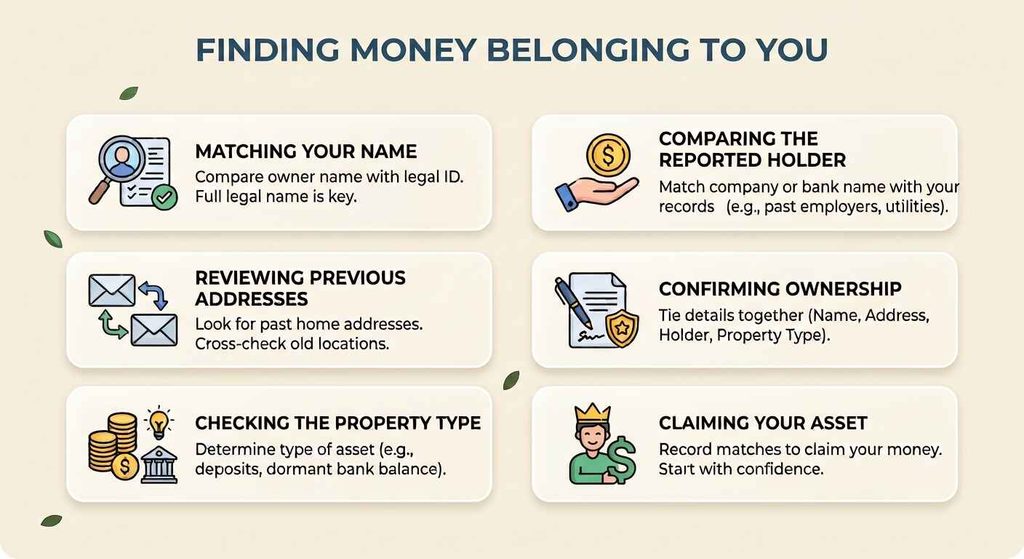
Finding money that belongs to you requires careful review of every result the portal returns. You should compare names, addresses, holders, and property types against your own records. A single match can lead to several more if you search using old addresses or former names. Keeping notes during your search helps you track each record you plan to claim.
Matching Your Name
Matching your name means comparing the owner name on the record with the legal name on your ID. Even small spelling differences can mean the record belongs to someone else. Use your full legal name, including middle name and any suffixes. Matching your name is the first step before moving on to address or holder checks.
Reviewing Previous Addresses
Reviewing previous addresses helps confirm that a record belongs to you. Records often list the last known address on file with the original holder. If you lived at that address, the record likely matches. Cross-check every old address you have used to find records you missed in past searches.
Checking the Property Type
Checking the property type tells you what kind of asset the record covers. A utility deposit, for example, links to a past utility account. A dormant bank balance links to an old checking or savings account. Matching the property type with your past accounts confirms whether the record belongs to you.
Comparing the Reported Holder
Comparing the reported holder confirms where the asset came from before transfer. If the holder matches a bank or employer you used, the record likely belongs to you. The holder field shows the exact company name on the report. Review old bank statements, pay stubs, or utility bills to verify the match.
Confirming Ownership
Confirming ownership ties together every detail on the record. Your name, address, holder, and property type must all align before you file a claim. If even one field does not match, the record may belong to another person with a similar name. Final confirmation protects you from filing on the wrong record and speeds up approval.
Claiming Unclaimed Money
Claiming unclaimed money follows a clear process that begins once you find a matching record. You submit a claim form, provide proof of identity, and show ownership of the asset. The state reviews your paperwork before sending payment. Each step protects both you and the original holder from fraud or errors.
Starting a Claim
Starting a claim means selecting a record on the portal and clicking the option to file a claim online. The system prompts you to enter basic contact details and confirm the property ID. The portal creates a claim file tied to your name and the record. Once you start a claim, you cannot edit the same record again without contacting the state.
Claimant Identification
Claimant identification requires a valid government-issued photo ID, such as a driver’s license or passport. The portal asks for your full legal name, date of birth, and ID number. Clear scans or copies speed up the review process. Missing or unclear IDs often delay claim approval.
Ownership Proof
Ownership proof shows that you are the rightful owner of the asset tied to the record. This can include old bank statements, pay stubs, utility bills, or policy documents. The proof must show your name and link to the reported holder. Strong proof speeds up approval.
Supporting Documents
Supporting documents back up your ownership proof with extra details. These may include W-2 forms, account closure letters, dividend notices, or insurance policy numbers. Each document should be readable and dated when possible. Clear documents help the reviewer verify your claim quickly.
Claim Submission
Claim submission happens after you upload all required documents and review your entry for errors. The portal confirms receipt and assigns a claim number for tracking. Double-check every name, address, and document before submission. Errors at this stage often cause delays or rejection.
Claim Status Tracking
Claim status tracking lets you follow the progress of your claim through the portal. You can check whether your claim sits under review, needs more documents, or has been approved. The system updates the status as staff complete each step. Regular checks help you respond quickly to any document requests.
Unclaimed Money Claim Verification
Verification ensures that unclaimed money reaches the rightful owner without fraud. The state reviews your identity, address, ownership proof, and name change records before approving payment. Strong verification protects both the claimant and the original holder. Every piece of information you provide must match the records on file.
Identity Verification
Identity verification confirms that the person filing the claim matches the owner on the record. Reviewers check your photo ID against the name and date of birth on file. The state may also check your ID against national databases. Clean identity verification speeds up approval.
Address Verification
Address verification confirms that the address on your ID matches the address tied to the record. Reviewers compare the reported holder’s address file with your current address history. A mismatch may trigger a request for extra documents. Address verification protects against fraudulent claims filed under someone else’s name.
Ownership Verification
Ownership verification confirms that you actually owned the asset reported by the holder. Documents like old statements, canceled checks, or policy paperwork serve as proof. The state checks these documents against the holder’s records. A clear match moves the claim toward approval.
Name Change Documentation
Name change documentation supports claims filed under a previous name. A marriage certificate, divorce decree, or court order shows the link between your current and former names. The state uses this paperwork to confirm your identity across name changes. Skipping this step can delay claims tied to old records.
Additional Evidence Requirements
Additional evidence requirements appear when the original documents do not fully prove ownership. The state may ask for tax returns, account closure notices, or letters from the holder. Providing these documents quickly avoids long delays. Reviewers list each request in the portal so you know what to send next.
Unclaimed Money Claim Processing
Claim processing covers the full review of your paperwork after submission. Staff check every document, confirm ownership, and decide whether to approve the claim. Each stage takes time, depending on the asset type and document quality. Tracking your claim helps you respond quickly when the state asks for more information.
Claim Review
Claim review begins once the state receives your complete submission. Staff open your file, check the property ID, and confirm that every required form is present. The review stage also covers fraud screening against national databases. A clean review moves your claim to document review.
Document Review
Document review checks the quality and accuracy of every document you uploaded. Staff look for readable scans, correct names, and matching dates. They also confirm that each document ties to the property type. Documents that fail review lead to a request for additional information.
Requests for Additional Information
Requests for additional information appear in the portal when staff need more proof to complete the review. The state lists each missing item in your claim file. You can upload the new documents through the portal without starting a new claim. Quick responses keep your claim moving forward.
Approved Claims
Approved claims move to the payment stage once staff confirm every detail. The system updates the claim status to approved and sets up the payment method. You can check the approval date in the portal. Approved claims show a final payment amount after any state fees.
Rejected Claims
Rejected claims show up when the state cannot confirm your identity or ownership. Common reasons include unclear documents, mismatched names, or missing proof. The portal explains the reason for rejection and lists what you can do next. You can resubmit a corrected claim with new documents.
Payment of Approved Claims
Payment of approved claims happens after the final review. The state sends payment by check or direct deposit, depending on your chosen method. You can also access county auditor to review official records. Payment times vary based on claim volume and asset type. Tracking your payment through the portal helps you confirm when funds are on the way.
Unclaimed Money for Deceased Owners
Unclaimed money tied to deceased owners follows a special process because the original owner can no longer file a claim. Heirs, executors, and estate representatives step in to recover the funds. The state requires extra documents to confirm the death and the right to claim. These claims often take longer because the state reviews estate records carefully.
Finding Money Under a Deceased Person’s Name
Finding money under a deceased person’s name requires searching the portal with their full legal name. Use the name on their death certificate and any previous names they used. Records tied to their last known address or employer often appear in this search. Family members and estate representatives can search before filing a claim.
Heir Claims
Heir claims are filed by relatives listed in the deceased person’s will or determined by state inheritance laws. Heirs must show proof of their relationship through birth certificates, family records, or court orders. The state uses these documents to confirm the right to claim. Multiple heirs can file a joint claim when needed.
Estate Claims
Estate claims are filed on behalf of the deceased person’s estate when probate is open. The estate representative acts on behalf of all heirs and beneficiaries. The state checks the probate court records before approving the claim. Estate claims protect the funds until the court finishes distribution.
Executor Claims
Executor claims come from the person named in the will to manage the estate. The executor files the claim using letters testamentary issued by the probate court. These letters prove the right to act on behalf of the estate. The state reviews the letters before releasing any funds.
Required Estate Documents
Required estate documents include the death certificate, the will or probate order, and letters of administration or letters testamentary. Heirs also submit birth certificates or family records to prove their relationship. Clear, certified copies speed up the review process. Missing documents delay the claim and may trigger a request for more information.
Unclaimed Money Record Changes
Unclaimed money records change over time as new assets are reported, old records are claimed, or property details are updated. The portal refreshes records regularly to show the most current information. Reviewing these changes helps you keep track of new matches tied to your name. Archived records stay available for historical searches even after removal.
Newly Reported Money
Newly reported money appears in the portal when holders submit their annual unclaimed property reports. Banks, employers, and utility companies file these reports each year. New records often come from accounts that just finished their dormancy period. Searching the portal every few months helps you catch fresh matches.
Updated Property Information
Updated property information shows up when a holder submits corrections to a record. Corrections may include new amounts, corrected names, or updated holder details. The portal lists the latest version of each record. Reviewing updates helps you confirm that the details match your own records.
Claimed Money
Claimed money shows up as paid or removed once an owner successfully files a claim. The portal updates the status so other people cannot file on the same record. Claimed records move to an archive after a set period. Searching the portal after a claim shows that the record no longer appears in active results.
Removed Records
Removed records leave the active search list once the state finishes its review or the holder reclaims the funds. The removal protects claimants from filing on records that no longer exist. The archive still holds removed records for historical review. Removed records do not affect your ability to file on other active matches.
Archived Records
Archived records keep old data available for research and historical searches. These records show past claims, paid amounts, and holder history. Researchers and heirs often use archived records to track old claims. The archive helps the state maintain a full history of unclaimed property activity.
Search Problems
Search problems happen when records do not appear, names match too many results, or documents fail to prove ownership. Knowing how to handle these issues saves time during the search and claim stages. The portal and state staff offer help when problems arise. Reviewing each problem carefully helps you find a clear path forward.
No Matching Name
No matching name appears when your search returns no results. Try old names, alternate spellings, or previous addresses. The state may hold records under a name you no longer use. Expanding your search with these variations often surfaces hidden matches.
Multiple Matching Owners
Multiple matching owners happen when several people share the same name. The portal lists each match with addresses, holders, and amounts. Compare every detail against your own records to find the right one. If you cannot tell the matches apart, contact the state for help before filing.
Missing Property Record
Missing property records show up when a record disappears after a recent search. The state may have removed it after a successful claim or holder update. Check the archived records list or contact the state to confirm the status. A missing record does not always mean the funds are gone.
Insufficient Ownership Evidence
Insufficient ownership evidence triggers when the documents you submit do not fully prove your claim. The state asks for more paperwork, such as old statements or account records. Gathering stronger documents and resubmitting solves the issue. Clear, dated documents work best.
Claim Documentation Problems
Claim documentation problems appear when your uploaded files are blurry, incomplete, or outdated. Resubmit clear scans with readable text and correct dates. Avoid screenshots when certified copies are available. Clean documentation prevents unnecessary delays.
Claim Already Submitted
Claim already submitted shows up when another person files a claim on the same record. The state reviews competing claims carefully before deciding who receives the funds. If you believe the record belongs to you, submit your own claim with stronger proof. The state notifies both claimants once it reaches a decision.
Contact Details
For questions about the Fairfax unclaimed money search or state treasury lookup process, the contact details below can help you reach the appropriate office for assistance with unclaimed funds, claim procedures, and related inquiries.
Office Hours
Mon-Fri: 8:00 AM – 5:00 PM
Contact Number
(800) 468-1088
Frequently Asked Questions
Find quick answers about locating and claiming Unclaimed Money in Virginia.
How do I start an unclaimed money search?
Start by visiting Virginia Treasury’s unclaimed money portal. Enter your full name, former business name, or property ID. The site checks the state’s unclaimed property database and shows any matching assets. If a match appears, follow the on‑screen prompts to submit a claim online or download the missing money claim form. Call (800) 468‑1088 for help. The system updates weekly, so checking periodically catches new entries.
What documents are needed for a claim?
Required paperwork includes a government‑issued photo ID, proof of ownership such as a former bank statement, insurance policy, or employment record, and a completed claim form. For retirement accounts, a recent 1099‑R may be needed. For deceased owners, a certified death certificate and executor documentation are required. Submit copies through the online portal or mail them to the state treasury address listed on the form. Keep originals safe in case the office requests them.
Can I claim unclaimed retirement accounts?
Yes, you can claim unclaimed retirement accounts that were never rolled over or closed. Search the portal with the account holder’s name. When a retirement fund appears, gather former account statements, a Social Security number, and a valid ID. The claim form asks for the account number if known. After submission, the treasury verifies the information and issues a payment, usually by check. Contact the treasury if the account was with a private firm that no longer exists.
How long does the unclaimed cash recovery take?
The time frame varies, but most claims are resolved within 30 to 60 days after the treasury receives all required paperwork. Simple cases with clear ownership may finish in about a month. More complex situations, such as estates or multiple owners, can take longer. You can check claim status through the online portal using the reference number supplied after filing. If delays occur, call the office during business hours for an update.
Is there a fee to retrieve state treasury money?
The state treasury does not charge a fee to retrieve unclaimed money. All claims are free, and the agency does not require payment before releasing funds. Be wary of third‑party services that ask for a percentage or upfront charge; they are not affiliated with the official portal. If you receive a request for money, verify the caller by checking the official website or calling (800) 468‑1088. The treasury will only need your personal information to confirm ownership.